

Overview
1.Introduction to CI/CD and Python
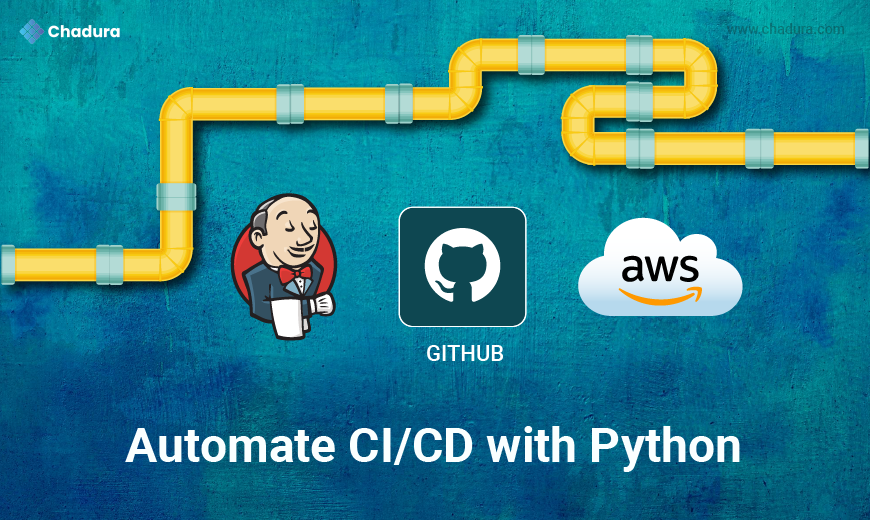
In today’s agile development landscape, Continuous Integration (CI) and Continuous Deployment (CD) are no longer optional - they’re foundational. CI/CD pipelines automate the process of building, testing, and deploying code, ensuring faster delivery and fewer bugs. Python, with its simplicity and versatility, has emerged as a powerful tool for orchestrating these pipelines.
Whether you're deploying a Django web app, a Flask API, or a machine learning model, Python can handle every stage of your DevOps workflow - from code validation to cloud deployment.
2. Why Python Is Ideal for DevOps Automation
Python’s dominance in DevOps stems from several key strengths:
- Readable Syntax: Easy to write, debug, and maintain.
- Rich Ecosystem: Libraries like boto3, paramiko, requests, and fabric simplify cloud and server operations.
- Cross-Platform: Python scripts run seamlessly on Linux, Windows, and macOS.
- Tool Integration: Python works well with Jenkins, GitHub Actions, Docker, Kubernetes, and AWS.
Python’s flexibility allows DevOps engineers to automate everything - from provisioning infrastructure to deploying microservices.
3. Anatomy of a Python-Powered CI/CD Pipeline
Let’s break down the core components of a CI/CD pipeline and how Python fits into each:
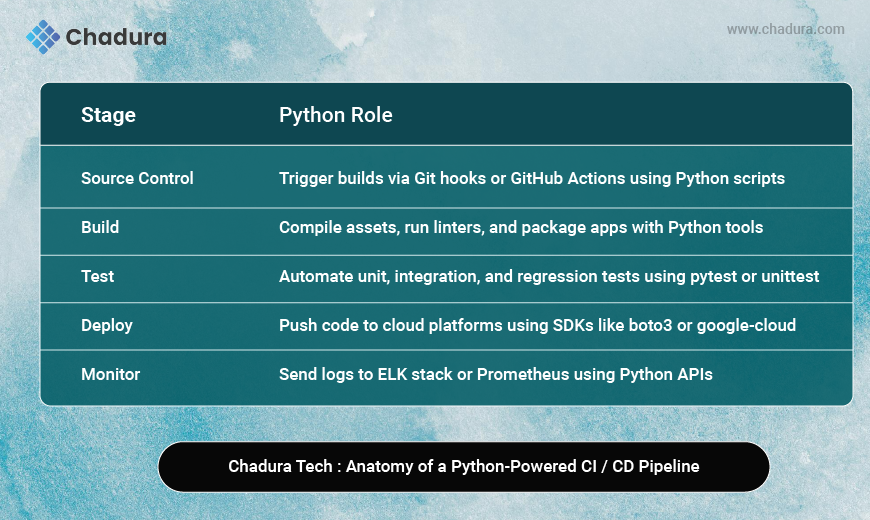
4. Setting Up CI with GitHub Actions
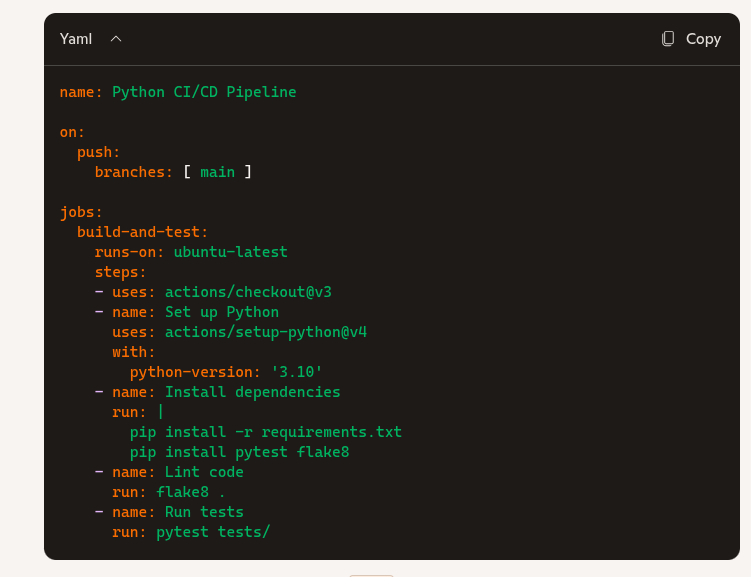
GitHub Actions is a popular CI platform that integrates directly with your GitHub repository. Here’s a sample workflow for a Python project:
This pipeline runs on every push to the main branch, installs dependencies, checks code quality, and runs tests
5. Continuous Deployment with Python Scripts
Once your code passes CI, it’s time to deploy. Python scripts can automate deployment to various platforms:
Example: Deploying to AWS EC2
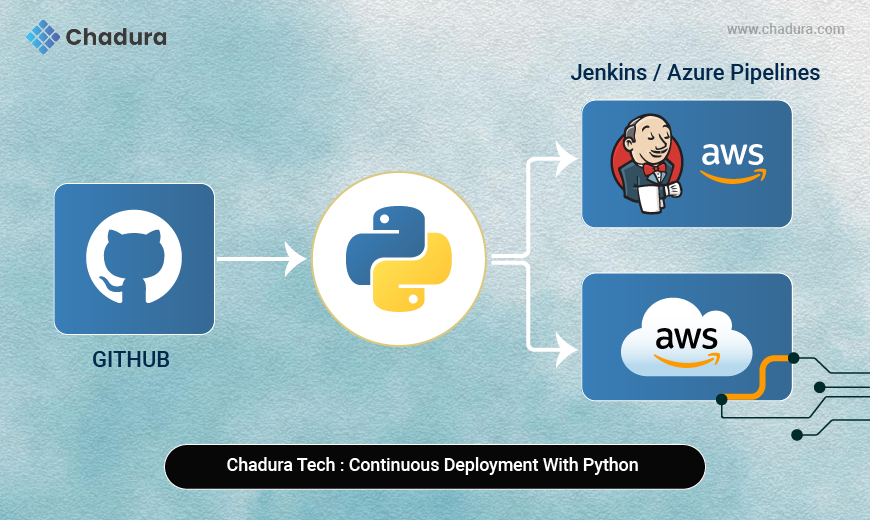
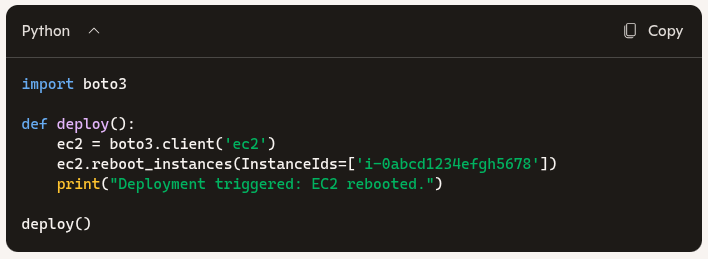
You can also use boto3 to update ECS services, upload files to S3, or trigger Lambda functions
6. Real-World Use Case: Django App on AWS
Let’s walk through a full CI/CD pipeline for a Django app:
CI Stage:
- GitHub Actions triggers on every push.
- Python scripts run pytest, flake8, and build Docker images.
CD Stage:
- Docker image is pushed to AWS ECR.
- ECS service is updated using boto3.
Monitoring:
- Logs are sent to CloudWatch.
- Alerts configured via SNS.
This setup ensures zero-downtime deployments and rapid rollback if needed
Best Practices for Python CI/CD
To ensure reliability and maintainability, follow these best practices:
Dependency Management
- Use pip-tools or poetry for lock files.
- Scan dependencies with pip-audit or safety.
Testing Strategy
- Adopt the testing pyramid: unit > integration > end-to-end.
- Use pytest fixtures for reusable test setups.
Code Quality
- Enforce style with black, flake8, and isort.
- Integrate linters into your CI pipeline.
Secrets Management
- Store secrets in AWS Secrets Manager or GitHub Secrets.
- Avoid hardcoding credentials in scripts.
8. Monitoring and Feedback Loops
Monitoring is critical for post-deployment success. Python can integrate with:
- Prometheus: Export metrics via custom Python exporters.
- Grafana: Visualize metrics and logs.
- ELK Stack: Send logs using logstash or elastic-apm.
You can also use Python to trigger alerts via Slack, email, or SMS.
9. Security and Compliance in CI/CD
Security should be baked into your pipeline:
- Static Analysis: Use bandit to scan for vulnerabilities.
- Dependency Scanning: Detect outdated packages with safety.
- Secrets Detection: Use git-secrets or truffleHog.
Python makes it easy to integrate these tools into your CI/CD workflow
10. Challenges and How to Overcome Them
- Challenge: Environment Drift
- Solution: Use Docker containers to ensure consistency across environments.
- Challenge: Slow Pipelines
- Solution: Parallelize tests and cache dependencies.
- Challenge: Manual Rollbacks
- Solution: Implement automated rollback scripts in Python.
11. Future Trends in Python DevOps
- AI-Powered CI/CD: Python-based ML models to predict deployment failures.
- Serverless Pipelines: Trigger CI/CD via AWS Lambda or Azure Functions.
- GitOps: Python scripts managing infrastructure as code via Git.
As DevOps evolves, Python will remain a key player in automation and orchestration
12. Final Thoughts
Python’s versatility makes it a cornerstone of modern DevOps. From writing tests to deploying cloud-native apps, Python empowers teams to build scalable, secure, and automated CI/CD pipelines. At Chadura Tech, we believe in blending technical precision with creative innovation. This blog is part of our ongoing mission to share actionable insights and build a community of forward-thinking developers.